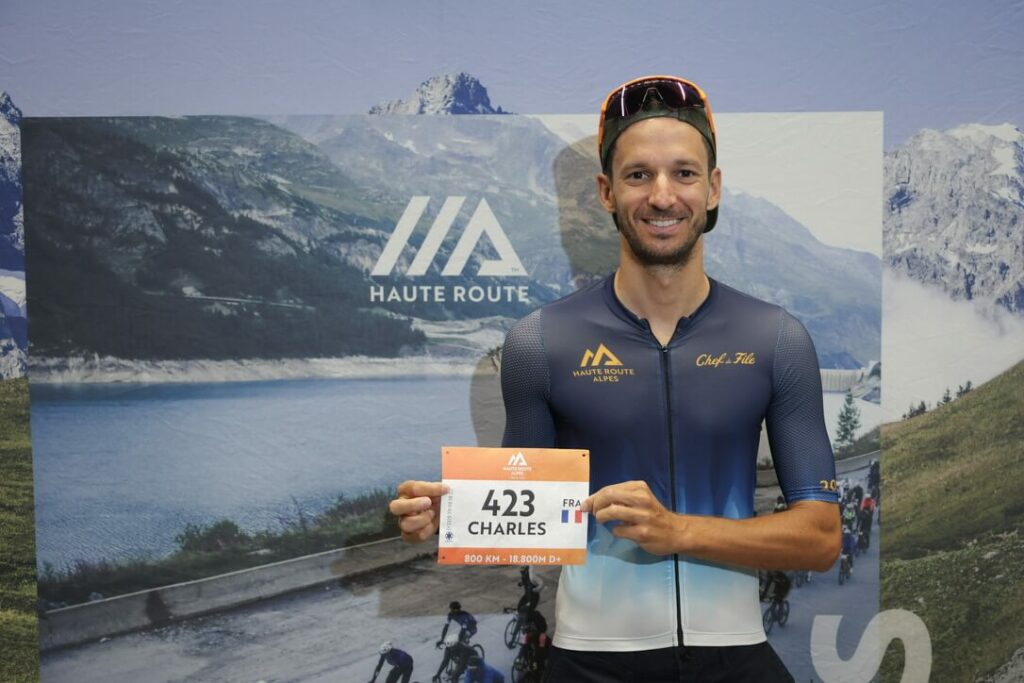
Before Haute Route Alps 2025 even started, it already felt big.
Arriving in Megève, collecting the bib, race jersey and bags, seeing hundreds of riders at the briefing, watching the whole organisation move around the event — it immediately felt like much more than a normal sportive. It felt like stepping into a real stage-race environment, with all the excitement, pressure and logistics that come with it.
That atmosphere got to me straight away.
I barely slept the night before stage 1. I was too excited, too alert, too ready to get going. By the time I rolled to the start, I already knew I was not perfectly recovered — but I also knew I was fully in it.
What followed was a full week of climbing, mistakes, good legs, bad legs, daily recovery, weather stress, small dramas, and a final result that left me both satisfied and hungry for more: 13th overall after seven days from Megève to Nice.
Stage 1 — Megève to La Clusaz
137 km / 3,100 m of elevation gain
Key climbs: Col de l’Épine, Croix Fry, Aravis
The week started exactly how a stage race should not start.
I had a clear plan: stay calm, do not go too deep, and think about the full week rather than the first climbs. Within the first real effort, that plan was already in trouble. The adrenaline was high, everyone was riding hard, and I did what a lot of amateurs do in stage racing: I raced the moment instead of the week.
I still finished 17th on the stage, which was a decent start, but the real lesson came immediately. In a seven-day event, stage 1 is never just stage 1. It is also the beginning of everything that follows.
I also got my first reminder that details matter: I lost a bottle early, which meant losing a big part of my carbohydrate plan for the day. In the Alps, that kind of mistake becomes expensive very quickly.
Stage 2 — Megève to Tignes
109 km / 3,500 m of elevation gain
Key climbs: Col des Saisies, Cormet de Roselend, Tignes
This was the day the week really opened up.
The sensations were very good, the climbing was strong, and for the first time I felt like I was not just surviving the event — I was actually racing it. Roselend was spectacular, the legs were there, and I managed to stay competitive throughout the day.
I finished 10th on the stage and moved up to 12th overall.
That changed something mentally. The top 10 no longer felt like a fantasy. It felt reachable. And that is one of the dangerous things about a good day in a stage race: it gives you belief, but it can also make you forget how quickly the Alps can shift the balance the next day.
Stage 3 — Tignes to Serre-Chevalier
160 km / 3,300 m of elevation gain
Key climbs: Iseran, Télégraphe, Galibier
This was the day the week started to bite.
I had slept much better and wanted to believe the recovery would carry me through, but from the first kilometres I could feel the legs were heavy. Not terrible, just heavy enough to know it was going to be a proper stage-race day: not a disaster, not a flyer, just one of those days where you have to manage yourself honestly.
There is nowhere to hide on a route like this. The Iseran is majestic, the Télégraphe already hurts, and the Galibier always tells the truth.
That day, I suffered properly on the final climb. The result was still respectable — 15th on the stage — but it was the first day where I really felt the internal reality of the event: even when the ranking is not bad, the experience can feel a lot harder than the result suggests.
I slipped back to 14th overall, but the gaps were still small enough for everything to remain open.
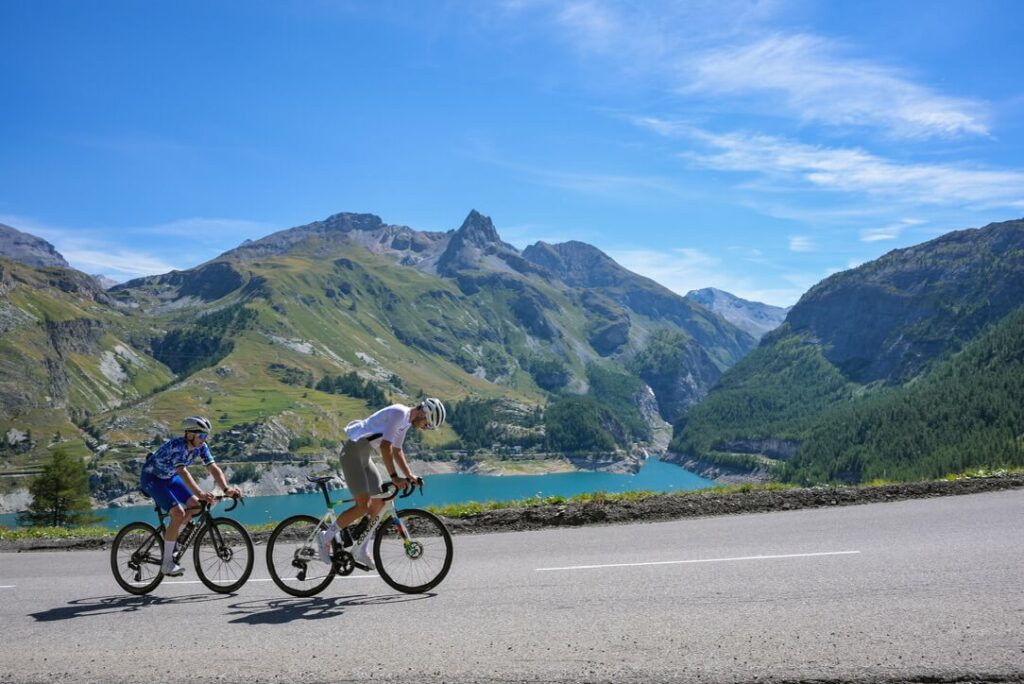
Stage 4 — Briançon loop
That is where Haute Route becomes really interesting.
95 km / 2,000 m of elevation gain
Key climbs: Izoard via Casse Déserte
On paper, this was the “lighter” day. In reality, there is no easy day in a week like this.
I felt better than on the Galibier stage, but not amazing either. The first short effort went well, and I took confidence from that. Then came the strategic part of the day and, finally, the long climb to the Izoard.
I tried to be more disciplined, to ride to my numbers rather than to the group, and that was probably the right decision. It still hurt, but it was a more controlled kind of suffering.
I finished 17th on the stage and dropped to 16th overall. A little disappointing on paper, but one of those days where I do not think I could have ridden much smarter with the legs I had.
By then, the race was no longer only physical. It had become emotional too.
Stage 5 — cancelled
Heavy rain and full weather chaos
This was one of the strangest moments of the week.
I woke up early, got dressed in full waterproof kit, rode through terrible conditions to the start, arrived soaked, mentally ready for war — and then the stage was cancelled.
It was the right call, but still frustrating. In stage racing, you spend a lot of energy building yourself toward each day. When a stage disappears, it leaves a strange feeling behind: part relief, part disappointment, part empty space.
Still, it also created a reset. Whether we wanted it or not, everyone suddenly got a recovery day.
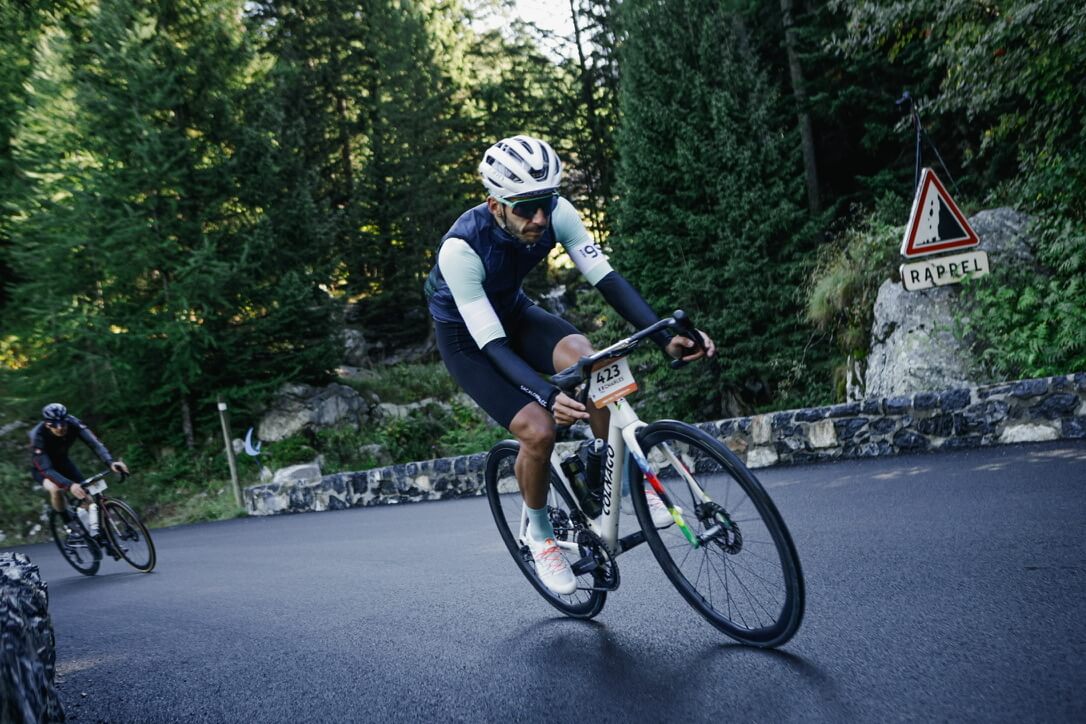
Stage 6 — Cuneo to Nice
180 km / 3,500 m of elevation gain
Key climbs: Col de la Lombarde, Col de la Colmiane
This was one of the best days of the week.
The forced recovery had helped, and for the first time in several days I felt more like myself again. I rode the first major climb with much better control, managed the effort more intelligently, and stayed in the race instead of only reacting to it.
By the end of the day, I was back to riding aggressively in the right moments, and that mattered as much mentally as physically. I finished 10th on the stage and moved up to 14th overall.
The top 10 was gone by then, but there was still something important to fight for: ending the week well.
And seeing the sea after days of mountain racing gave the whole day a special feeling. It felt like the race was opening again.
Stage 7 — Nice time trial / Col d’Èze
26 km loop / final 9.5 km timed uphill
Key climb: Col d’Èze
This was the perfect way to finish.
A final uphill time trial is brutally simple: no hiding, no tactical games, no pretending. Just one effort, one target, and whatever is left in the legs after a full week.
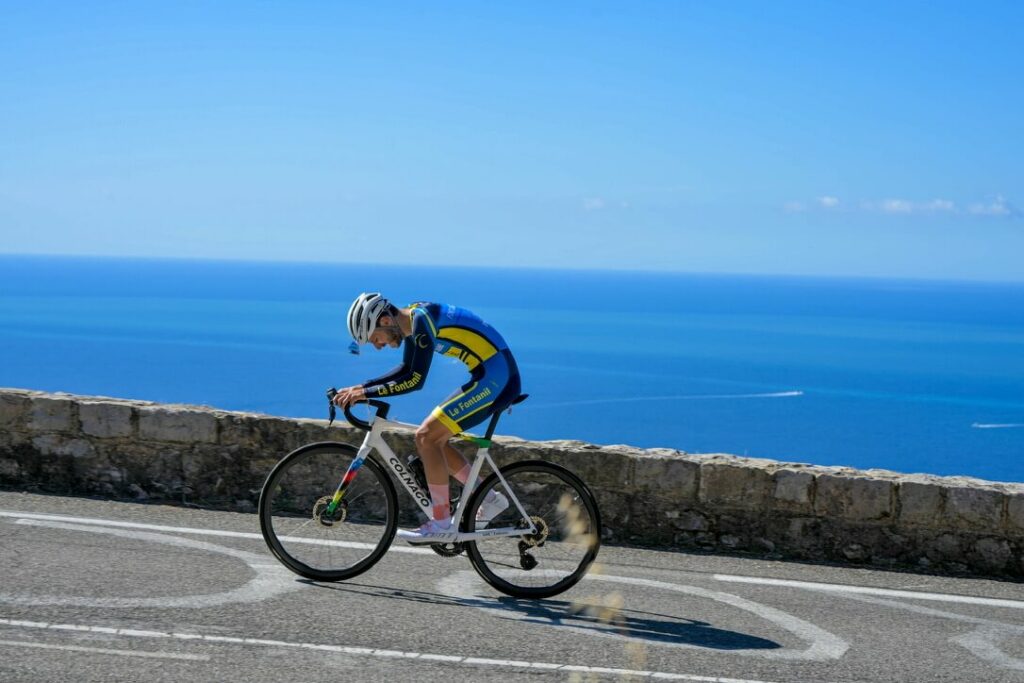
I paced it hard, suffered exactly as expected, and managed to finish strongly. I ended up 4th on the stage, which was a great surprise, and it moved me up to 13th overall.
That did not change the whole week, but it changed the feeling at the end of it.
After all the fatigue, mistakes, stress and recovery work, it was incredibly satisfying to finish with one of my best rides of the event.
What stayed with me most
What I will remember most is not only the final ranking.
It is the full texture of the week: the excitement in Megève, the mistake of starting too hard, the belief that came after stage 2, the suffering on the Galibier, the emotional middle of the week, the absurdity of the cancelled stage, the sea after the mountains, and the relief of ending on a great time trial.
That is what a week like Haute Route gives you.
Not just data, rankings or power numbers, but a real sequence of memories that stays with you because you had to earn every part of it.
If I had to summarise my biggest takeaways, they would be simple:
- do not race the early stages like one-day events
- protect your week, not only your ego
- recovery matters more than most amateurs think
- small logistical mistakes become expensive very quickly
- and the Alps always reward patience in the long run
Would I recommend Haute Route Alps? Absolutely.
Would I do things differently next time? Also absolutely.
And that is probably the best sign of all.
If you are dreaming about your own Alpine challenge, or simply want to experience legendary roads with better structure, support and recovery around you, explore our Alps cycling holidays, browse dates & pricing, or get in touch.
And if you want to learn more about the event itself, you can visit the Haute Route official website.